网站导航



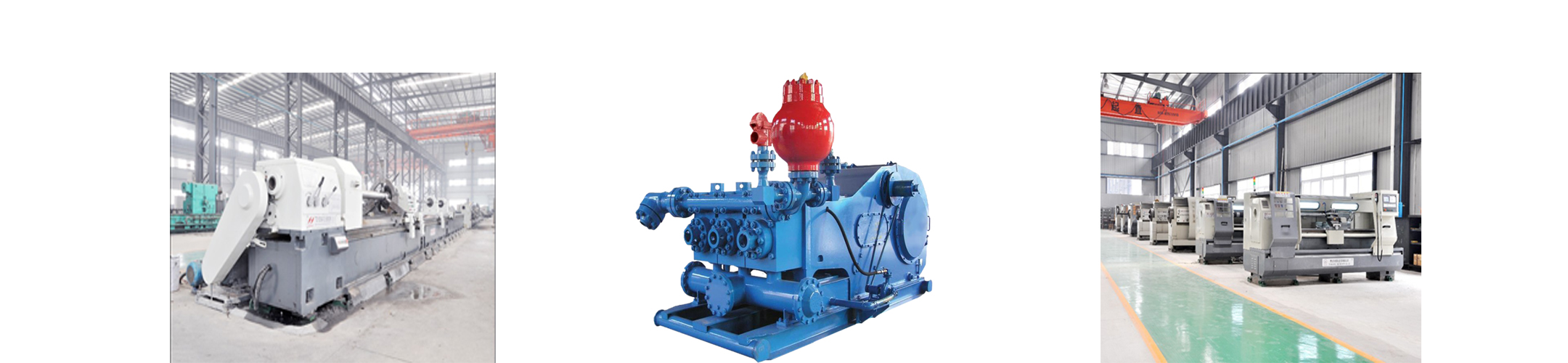
Horizontal and directional drilling have revolutionized the petroleum industry, allowing operators to access previously unreachable reservoirs and maximize production from existing fields. However, these complex well geometries place unprecedented demands on a rig's mud pump. To successfully navigate long lateral sections and maintain wellbore stability, the drilling fluid hydraulics must be managed with surgical precision. The F series mud pump, with its high-pressure capabilities and consistent flow rates, is an indispensable tool for these advanced drilling techniques.
Figure 1: F Series Mud Pumps Provide the Hydraulic Power for Advanced Well Geometries
In directional drilling, the mud pump must do more than just circulate fluid; it must provide the hydraulic energy required to drive downhole motors and steer the drill bit. As the well path deviates from vertical, the frictional losses within the drill string increase significantly. An F series mud pump provides the necessary discharge pressure to overcome these losses while maintaining the critical flow velocity needed for effective hole cleaning. Without the robust performance of a reliable triplex mud pump, reaching the target depth in a long horizontal section becomes nearly impossible.
Cleaning the wellbore is notably more difficult in horizontal sections where cuttings tend to settle on the lower side of the pipe, forming a "cuttings bed." To prevent stuck pipe incidents, the F series mud pump must deliver a sustained flow at specific velocities to keep these solids in suspension. This requires not only power but also mud pump performance consistency. Any fluctuation in flow can cause cuttings to settle, leading to torque and drag issues. The triplex design of the F series reduces pulsation, ensuring that the hydraulic energy is transmitted smoothly down the hole for optimal hole cleaning.
Directional drilling often involves sophisticated Measurement While Drilling (MWD) and Logging While Drilling (LWD) tools. These sensors rely on stable mud pump pressure to function correctly. Excessive pressure pulsations can create "noise" that interferes with the transmission of downhole data. By utilizing an F series mud pump equipped with a high-performance pulsation dampener, operators can ensure a "quiet" hydraulic environment. This not only improves data accuracy but also extends the life of the downhole tools by reducing the mechanical stress caused by erratic fluid surges.
Every horizontal well is unique, and mud pump selection should reflect the specific requirements of the well plan. For long laterals, models like the F-1300 or F-1600 are often required to handle the high circulating pressures. Customizing the liner sizes is also a critical optimization step. Smaller liners allow for the peak pressures often seen at the end of a long directional run, while larger liners provide the volume needed for faster drilling in the vertical sections. The versatility of the F series mud pump allows for these quick adaptations, ensuring the rig is always optimized for the current drilling phase.
In the middle of a complex directional run, an equipment failure is a catastrophic event. Preventive maintenance for the F series mud pump becomes even more critical during these high-load operations. Regularly inspecting the pistons, liners, and valves for any sign of wear can prevent a circulation failure when it matters most. Using high-quality, API 7K certified spare parts ensures that the mud pump can withstand the continuous, full-load operation required for directional projects. In oil drilling, your maintenance strategy is your best defense against unplanned downtime.
Modern drilling rigs often use sophisticated software to model hydraulics in real-time. The latest F series mud pumps can be integrated with these systems, allowing the driller to adjust pump speed and discharge pressure based on the current downhole conditions. This data-driven approach allows for the optimization of Equivalent Circulating Density (ECD), which is vital for preventing wellbore ballooning or frac-outs in sensitive formations. The "smart" capabilities of the modern mud pump are a key component of the high-efficiency directional drilling programs of the future.
In conclusion, the F series mud pump is the backbone of modern horizontal and directional drilling. Its ability to deliver sustained high-pressure hydraulics while maintaining system stability is what allows the industry to push the boundaries of petroleum exploration. Whether you are drilling a complex offshore well or a long lateral on land, the performance of your mud pump is a decisive factor in your success. At Rig-Pump, we specialize in provide F series solutions that are tailored for the demands of advanced drilling engineering. Visit us today to learn more about our high-tech solutions for your next project.


